
 Recombinant human DKK-1 protein (Qk068)
 Price range: £320.00 through £3,960.00View product
Price range: £320.00 through £3,960.00
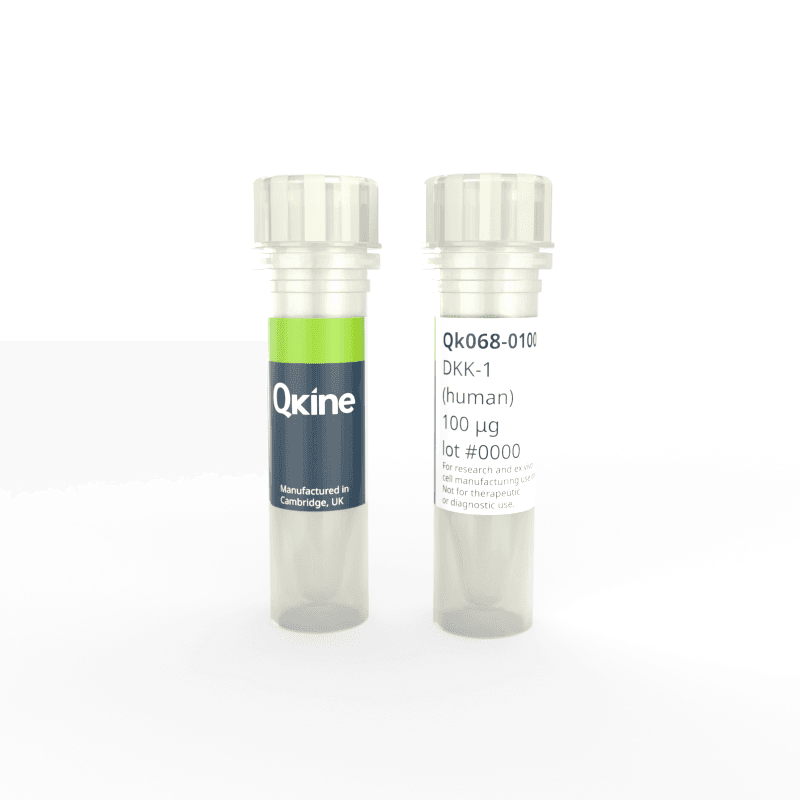

Dickkopf-related protein 1 (DKK-1) is a key player in the Wnt signaling pathway and regulates embryonic development, tissue balance, and diseases, including cancer. DKK-1 is a member of the DKK protein family and acts as a potent Wnt pathway antagonist. In cell culture, DKK-1 is pivotal for controlling cell fate, self-renewal, and differentiation by inhibiting the canonical Wnt/β-catenin pathway through LRP5/6 co-receptors. DKK-1 has been widely used in various applications including guiding stem cell differentiation, particularly in neural and osteogenic pathways, and mimicking dysregulated Wnt signaling seen in cancers.
Human DKK-1 has a molecular weight of 25.7 kDa, animal origin-free, carrier-free and tag-free to ensure its purity with exceptional lot-to-lot consistency. DKK-1 is suitable for the culture of reproducible and high-quality stem cells and other relevant cells.
This protein is also available as GMP compliant Cell Therapy Grade, to enquire email ryan.weber@matriqx.com.
In stock
Orders are typically shipped same or next day (except Friday).
Easy world-wide ordering, direct or through our distributors.
Price range: £320.00 through £3,960.00
Buy online with secure credit card or purchase order. For any questions, please email ryan.weber@matriqx.com
>98%, by SDS-PAGE quantitative densitometry
Expressed in E. coli
Animal origin-free (AOF) and carrier protein-free
Manufactured in our Cambridge, UK laboratories
Lyophilized from acetonitrile, TFA, mannitol
Differentiation of iPSC derived neural progenitors to neurons
Osteogenic differentiation
Maintenance of pluripotency in iPSC
Mesenchymal stem cell research
Expansion of induced pluripotent, embryonic and mesenchymal stem cells
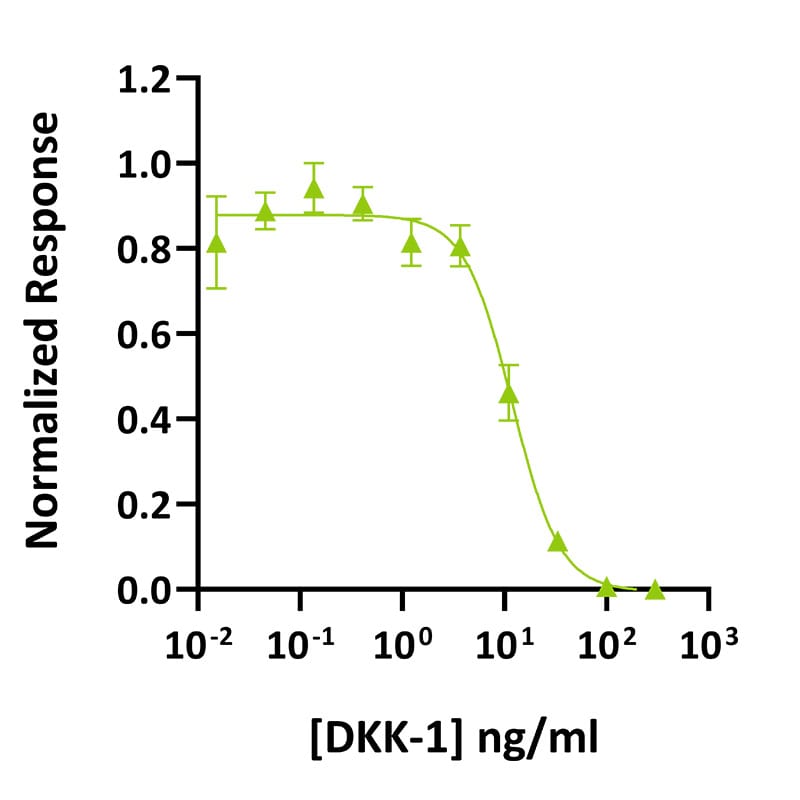
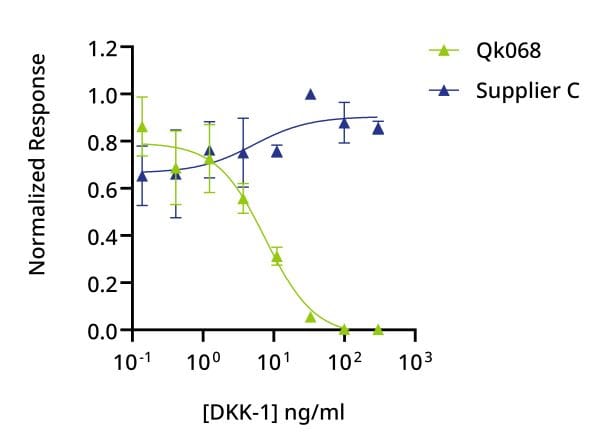
DKK-1 activity was determined using the Wnt-3a-responsive firefly luciferase reporter assay. Transfected HEK293T cells were treated in triplicate with a serial dilution of DKK-1 and a standard concentration of Wnt-3a for 24 hours. Firefly luciferase activity was measured and normalized to the control Renilla luciferase activity. EC50 = 12 ng/ml (0.47 nM). Data from Qk068 lot #204593.
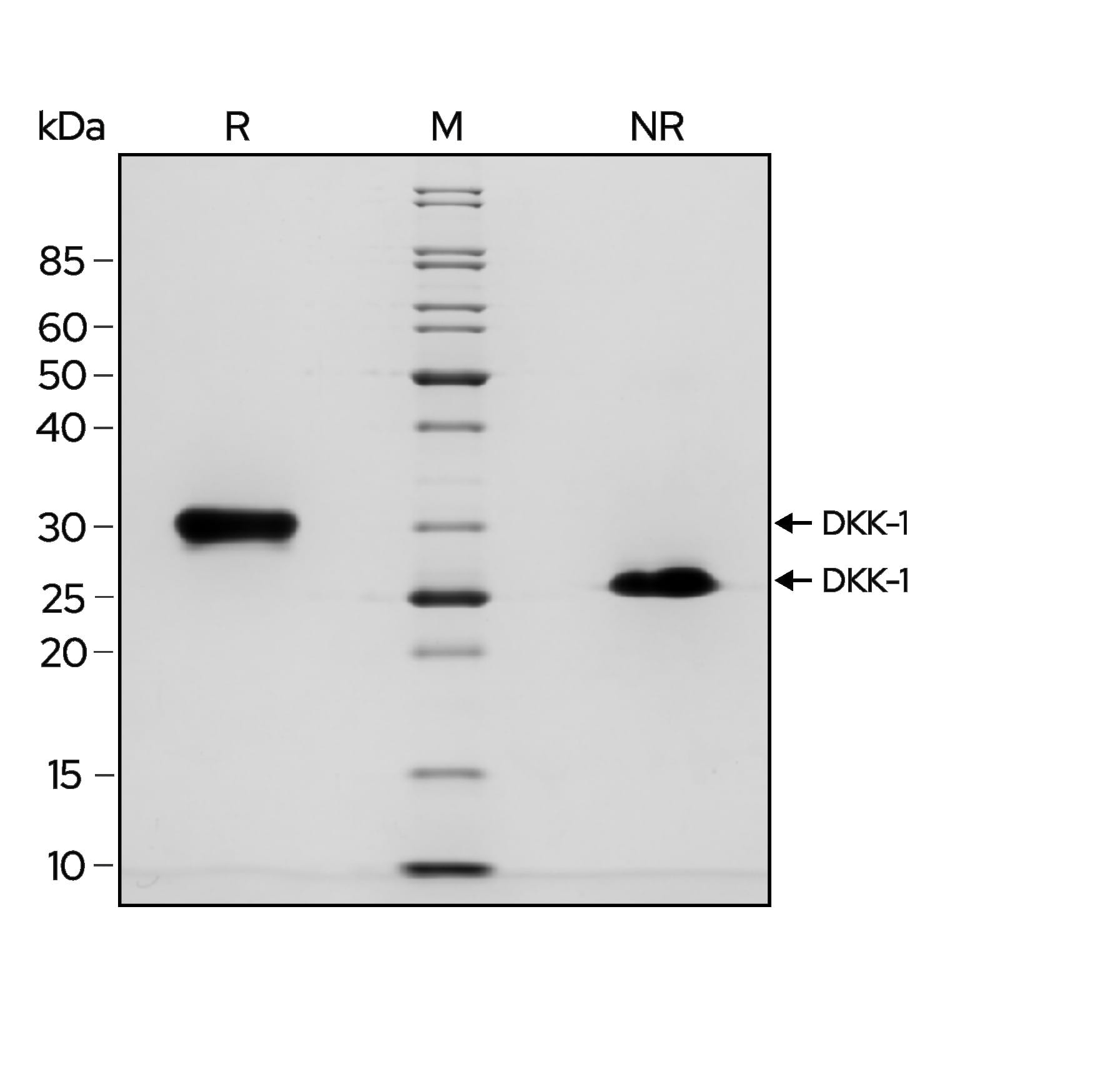
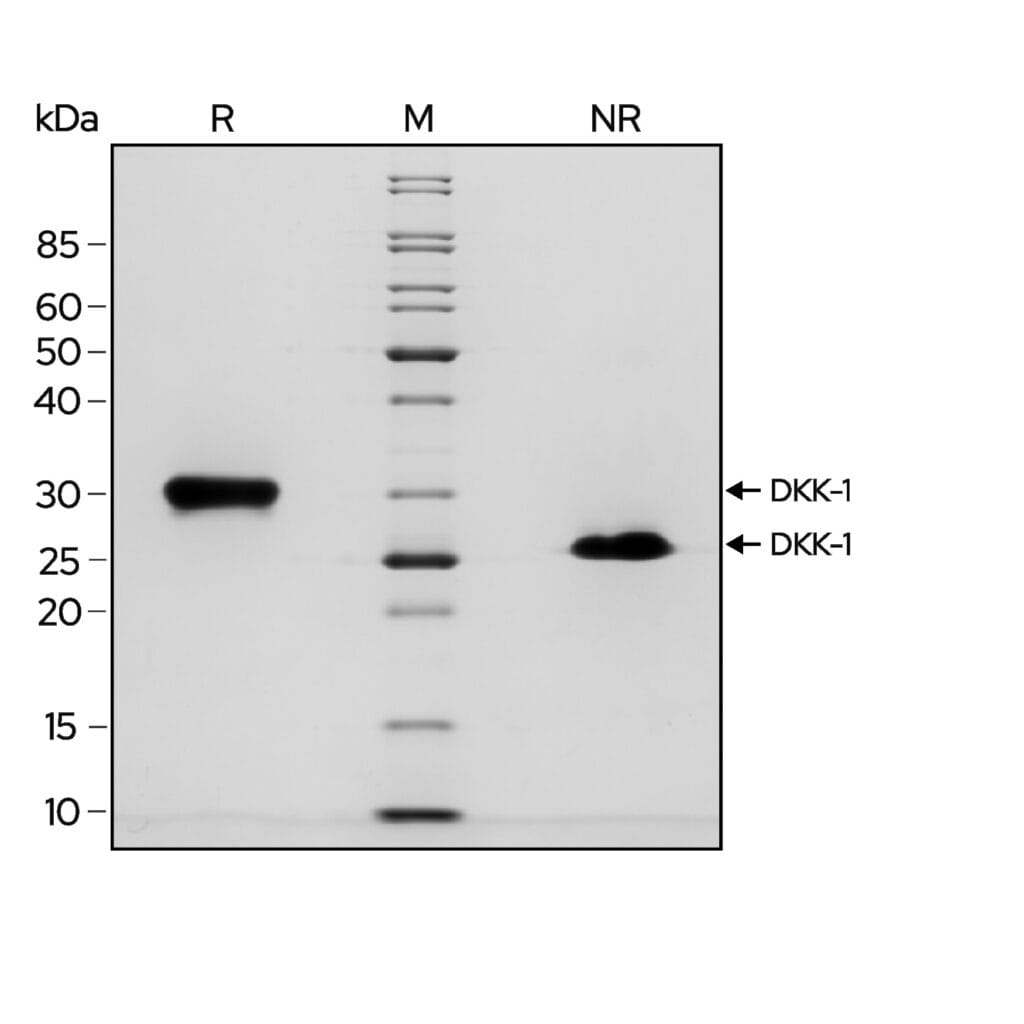
Recombinant DKK-1 migrates as a single band at approximately 26 kDa in non-reduced (NR) and at approximately 30 kDa in reduced conditions. No contaminating protein bands are present. The purified recombinant protein (3 µg) was resolved using 15% w/v SDS-PAGE in reduced (+β-mercaptothanol, R) and non-reduced (NR) conditions and stained with Coomassie Brilliant Blue R250. Data from Qk068 lot #204593.
Mass spectrometry: single species with expected mass
Recovery from stock vial: >95%
Endotoxin: <0.05 EU/μg protein
We are a company founded and run by scientists to provide a service and support innovation in stem cell biology and regenerative medicine. All our products are exceptionally high purity, with complete characterisation and bioactivity analysis on every lot.
Qkine animal origin-free DKK-1 is as biologically active as a comparable alternative mammalian expressed supplier protein. Quantitative luciferase reporter assay shows equivalent bioactivity of Qkine AOF DKK-1 (Qk068, green) and mammalian-expressed DKK-1 (supplier B, black). HEK293T cells were treated in triplicate with a serial dilution of DKK-1 and a standard concentration of Wnt-3a for 24 hours.
Qkine animal origin-free DKK-1 is more biologically active than a comparable alternative bacterially expressed protein. Quantitative luciferase reporter assay shows bioactivity of Qkine AOF DKK-1 (Qk068, green) compared to another bacterially expressed DKK-1 (Supplier C, blue). HEK293T cells were treated in triplicate with a serial dilution of DKK-1 and a standard concentration of Wnt-3a for 24 hours.
Please note: the supplier does not provide information on the biological activity of this protein.
Dickkopf-related protein 1 (DKK-1) is a protein integral to the regulation of the Wnt signaling pathway and plays a pivotal role in embryonic development, tissue homeostasis, and various pathological conditions, including cancer [1-4]. As a member of the DKK protein family alongside DKK-2, DKK-3, and DKK-4, DKK-1 was initially identified as a Xenopus head-forming molecule and functions as a potent antagonist of the Wnt signaling pathway [1].
With cell culture application, DKK1 is widely used for orchestrating cell fate decisions, self-renewal, and differentiation [5-6]. Its addition to the cell culture medium facilitates the binding to LDL receptor-related proteins 5 and 6 (LRP5/6) co-receptors, thereby inhibiting the activation of the canonical Wnt/β-catenin pathway [7-8]. This interference proves instrumental in maintaining pluripotency, particularly by finely regulating the equilibrium between self-renewal and differentiation in embryonic stem cells (ESCs) [9].
The versatile utility of DKK-1 extends to the directed differentiation of induced pluripotent stem cells (iPSCs) into specific lineages, including neural differentiation, where it serves to promote the development of neural lineages [10]. Additionally, DKK-1 guides osteogenic differentiation of mesenchymal stem cells (MSCs), offering implications for bone tissue engineering and other related applications [11].
In the context of disease modeling in vitro, DKK1 finds application in mimicking conditions associated with dysregulated Wnt signaling pathways, as seen in certain cancers exhibiting aberrant Wnt expression, such as esophageal squamous cell carcinomas and hormone-resistant breast cancers [12].
Further insights into the regulatory mechanisms of DKK1 and its familial counterpart DKK-4 underscore their significant roles in modulating the Wnt/β-catenin signaling pathway. This pathway involves the interaction of Wnt ligands with the seven-transmembrane receptor Frizzled, along with co-receptors LRP5 and LRP6. DKK-1 forms inhibitory complexes with LRP5 and LRP6, as well as another receptor, Kremen, leading to endocytosis of this complex and subsequent removal of LRP5 and LRP6 from the cell surface [13-14].
DKK1 protein exhibits a structured composition. It includes an N-terminal signal peptide directing its secretion, a conserved cysteine-rich domain (CRD) crucial for disulfide bond formation, and a linker connecting the CRD to the C-terminal region. This C-terminal region interacts with other proteins and is implicated in the overall conformation and function of DKK-1. Specific amino acid residues within the CRD and C-terminal regions are vital for DKK-1’s inhibitory effect on the Wnt signaling pathway [15].
Notably, DKK-1’s inhibition of the Wnt pathway proves indispensable for anterior development, disrupting posterior patterning in vertebrates. This is evident in mice lacking DKK1 expression, where a deficiency leads to the absence of head formation [2,16]. Collectively, these molecular and functional insights underscore DKK-1’s intricate role in cellular processes and its potential as a valuable tool in manipulating cellular behavior in diverse experimental settings.
Dickkopf-related protein 1 (DKK-1) is a potent Wnt pathway antagonist.
DKK-1 is expressed in the embryo during development and it’s increased expression can be found in several cancers.
No, DKK-1 is a Wnt signaling antagonist.
The DKK-1 gene encodes the dickkopf-related protein 1 (DKK-1) protein. Its expression is important in embryonic development.
DKK-1 binds to LDL receptor-related protein 5/6 (LRP5/6) and Kremen1/2 although other receptors such as CKAP4 have been identified in cancer cells.
LRP5/6 and Kremen1/2 are involved in Wnt signaling, DKK-1 binding to these receptors blocks Wnt signaling pathways.
DKK-1 binding to LRP5/6, prevents receptor complex formation and blocks Wnt signaling, Kremen1/2 binding promotes LRP5/6 internalization and prevents Wnt signaling. Other DKK-1 receptors such as CKAP4 can promote cell survival and proliferation in cancer cells.
Recombinant DKK-1 can be used in cell culture to guide stem cell differentiation, particularly in neural and osteogenic pathways, and to mimic dysregulated Wnt signaling seen in cancers.
Our products are for research use only and not for diagnostic or therapeutic use. Products are not for resale.
For use in manufacturing of cellular or gene therapy products. Not intended for in vivo applications.

£100, $140 or €120 Qkine gift card for product reviews with an image and £50, $70 or €60 for reviews without an image.
 Recombinant human DKK-1 protein (Qk068)