
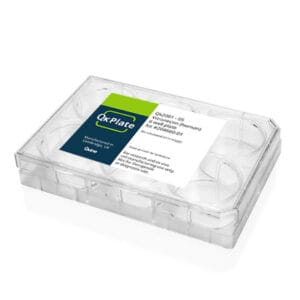
 QkPlate© human vitronectin coated 6 well plate (Qk2001)
 Price range: £135.00 through £400.00View product
Price range: £135.00 through £400.00
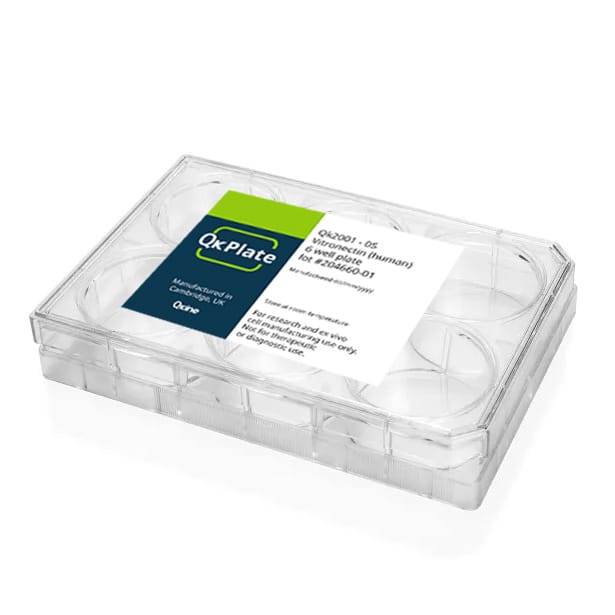
QkPlate© human vitronectin coated 6 well plates are pre-coated with Qkine high purity animal origin-free vitronectin for more reproducible iPSC culture. A convenient solution to save time and resources, QkPlates are dried for room temperature storage and validated >6 months from manufacture.
Vitronectin protein is widely used in stem cell culture. It provides a defined environment that supports the maintenance of pluripotency and is suitable for feeder-free culture, expansion, differentiation, and reprogramming of stem cells. Qkine recombinant vitronectin protein is ultra high-purity with exceptionally low residual endotoxins making it suitable for the reproducible culture of stem cells, primary cells, organoids, and use in sensitive neural differentiations.
More QkPlate© sizes will be available soon – email ryan.weber@matriqx.com for updates.
In stock
Orders are typically shipped same or next day (except Friday).
Easy world-wide ordering, direct or through our distributors.
Price range: £135.00 through £400.00
Buy online with secure credit card or purchase order. For any questions, please email ryan.weber@matriqx.com
Manufactured in our Cambridge, UK laboratories
Certified animal origin-free (AOF)
Store at room temperature
QkPlates have been tested up to 6 months from manufacture date
Manufactured in an environment where mammalian cells are handled
Induced pluripotent stem cell culture and maintenance
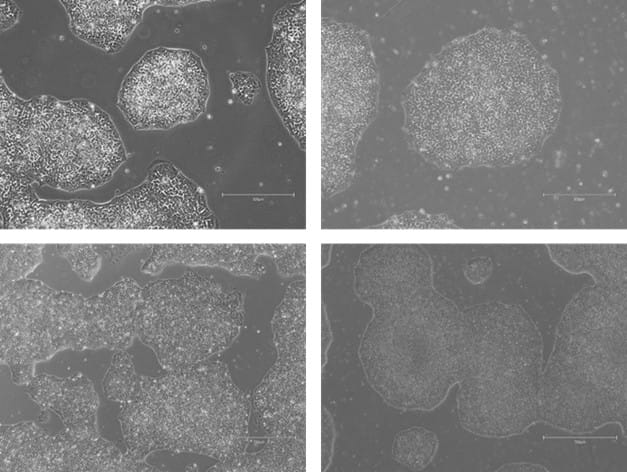
Phase-contrast images of WTSIi_005A cells cultured on human vitronectin pre-coated QkPlates (Qk2001) that had been dried and stored at room temperature for 6 months before seeding. Images are shown at two magnifications, with scale bars of 300 µm (top row) and 750 µm (bottom row).
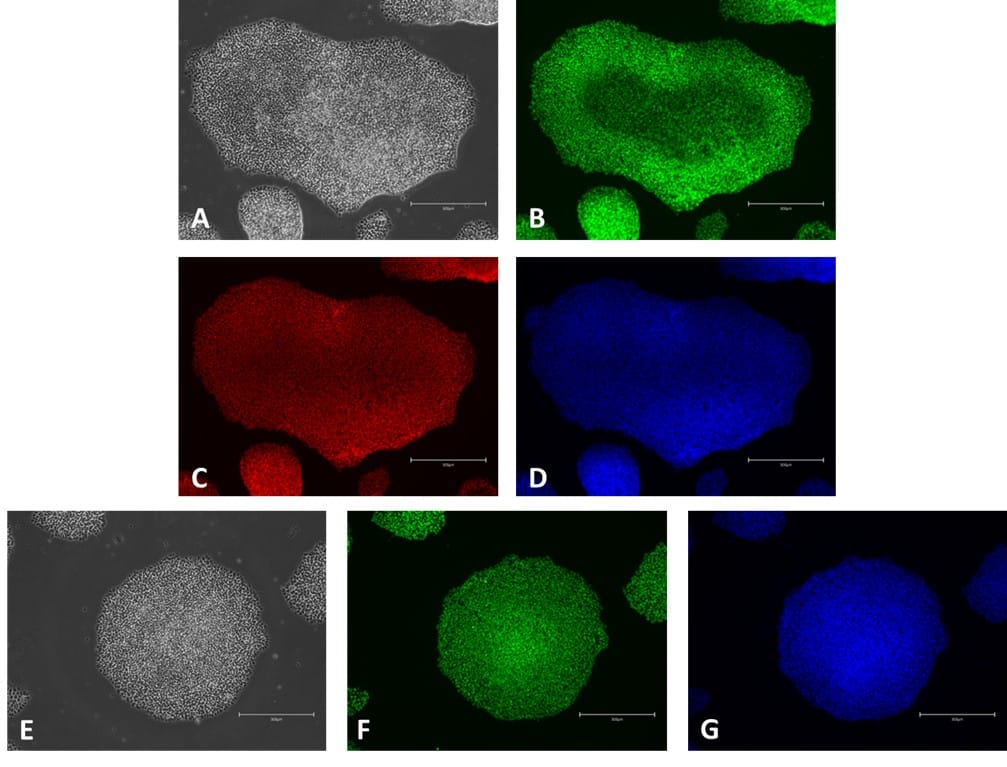
ICC of pluripotency markers in iPSC grown in E8-like medium on Qkplates (Qk2001). Phase contrast image (A); NANOG expression (green, B); OCT-4 expression (red, C); Hoechst 33258 (blue, D); Phase contrast (E); SOX2 expression (green, F); Hoechst 33258 (blue, G). Scale bar = 300 µm.
Endotoxin: <0.05 EU/μg protein
Sterility tested
We are a company founded and run by scientists to provide a service and support innovation in stem cell biology and regenerative medicine. All our products are exceptionally high purity, with complete characterisation and bioactivity analysis on every lot.
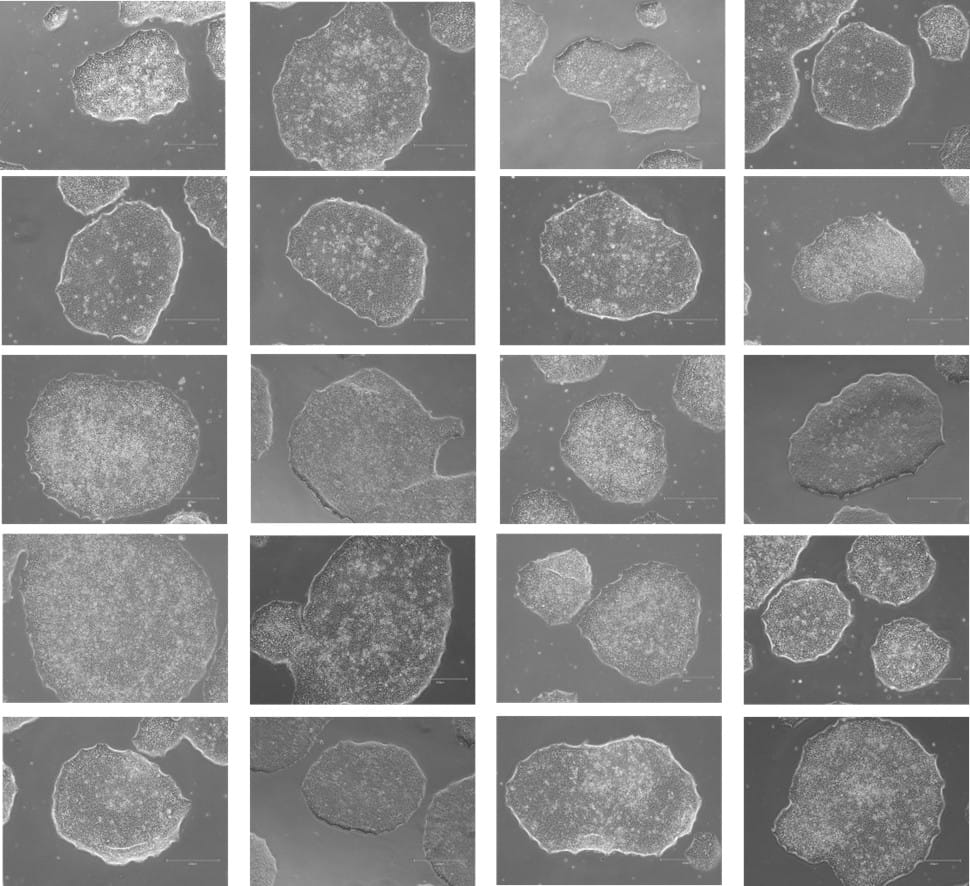
Phase-contrast images of WTSIi_005A cells acquired over a 10-week period of routine maintenance passaging. Cells were cultured on human vitronectin pre-coated QkPlates (Qk2001) that had been dried and stored at room temperature. Images illustrate sustained cell attachment, typical morphology, and stable growth over extended culture.
QkPlate© 6 well vitronectin plates are pre-coated with Qkine ultra-high purity vitronectin Qk120 for the reproducible culture of iPSCs.
Vitronectin is a glycoprotein found in the extracellular matrix (ECM) and blood plasma. It plays a crucial role in various physiological processes, including cell adhesion, migration, wound healing, and immune response regulation [1]. Vitronectin interacts with various cell surface receptors and other ECM proteins, making it a key player in tissue remodeling and repair [2].
Vitronectin is involved in numerous biological processes, including cell adhesion and migration by binding to integrins, wound healing and tissue repair, regulation of proteolysis and fibrinolysis, immune response regulation, and angiogenesis by promoting the formation of new blood vessels and supporting tumorigenesis and metastasis [3-5].
In cell culture, vitronectin has been widely used due to its key roles in cell adhesion, proliferation, differentiation, and survival. It interacts with integrins and other cell surface receptors, creating a physiologically relevant microenvironment for various cell types, particularly in stem cell research and regenerative medicine [6-7]. As a coating substrate, vitronectin promotes cell attachment, especially for epithelial cells, endothelial cells, and certain cancer cells. By binding to integrins, vitronectin enhances cell proliferation and survival through the activation of intracellular signaling pathways such as PI3K/AKT and MAPK. This attachment prevents anoikis, a form of cell death that occurs when cells detach from the ECM, ensuring the maintenance and expansion of cultured cells [8].
In stem cell applications, vitronectin is used for the culture and maintenance of iPSCs and ESCs, promoting their efficient differentiation into various lineages. It is also a key component of defined, xeno-free culture systems, eliminating the need for animal-derived products, reducing variability, and improving reproducibility in stem cell research [7,9-11].
In organoids technology, vitronectin plays a critical role in the development and maintenance of organoids due to its properties that enhance cell adhesion, proliferation, and differentiation. As a matrix scaffold, vitronectin supports the initial adhesion and aggregation of cells, essential for stable organoid structure formation [12] By binding to integrins such as αvβ3 and αvβ5 on cell surfaces, vitronectin facilitates cell clustering, a prerequisite for organoid growth [13] It activates integrin-mediated signaling pathways like PI3K/AKT and MAPK/ERK, promoting cell survival, proliferation, and differentiation, which are crucial for expanding progenitor cells and their differentiation within the organoid. Vitronectin has been implicated in the development of liver organoid [14].
In tissue engineering and regenerative medicine, vitronectin-coated scaffolds and biomaterials enhance cell attachment, proliferation, and differentiation, contributing to the development of functional tissue constructs [15-16]. Additionally, vitronectin is used to prepare cells for cell therapy, ensuring their viability and functionality upon transplantation.
Vitronectin is particularly important for optimizing culture conditions in the manufacturing of serum-free media, compensating for the lack of adhesion-promoting factors typically provided by serum and supporting cell growth under defined conditions [7, 17]. The use of recombinant vitronectin ensures batch-to-batch consistency, which is critical for reproducibility in experimental and clinical applications.
Structurally, vitronectin is a multifunctional glycoprotein with a molecular weight of approximately 75 kDa. It comprises several domains, including the somatomedin B domain at the N-terminal, which is important for binding to the urokinase receptor and stabilizing the inactive form of plasminogen activator inhibitor-1 (PAI-1). The RCL (Ricinus communis agglutinin-like) domain is crucial for heparin binding, while the hemopexin-like repeats facilitate interactions with integrins and other ECM components [2,6,18]. Vitronectin can undergo conformational changes that expose or hide specific binding sites, enabling it to interact with a wide range of ligands and receptors.
In summary, vitronectin plays a crucial role in various applications, particularly in stem cell and organoid applications, by providing a defined and supportive environment for stem cell maintenance, differentiation, and reprogramming. Its use enhances the reproducibility and efficiency of several cell cultures, making it a valuable tool in both research and therapeutic contexts.
QkPlate vitronectin coated plates are dried and can be stored at room temperature. They have currently been tested up to 6 months from date of manufacture.
Vitronectin is widely used in stem cell culture. It provides a defined environment than supports maintenance of pluripotency and is suitable for feeder-free culture, maintenance, differentiation, and reprogramming of stem cells.
Vitronectin is not a cytokine but it signals through integrin receptors to support maintenance of pluripotency during iPSC culture.
Vitronectin gene encodes vitronectin protein, which is a component of the extracellular matrix.
Vitronectin binds to integrins, heparin and heparan sulfate proteoglycans, plasminogen activator inhibitor – 1, complement system.
The vitronectin receptor facilitates cell adhesion, cell migration and initiates signaling processes that promotes cell survival, proliferation and differentiation.
A glycoprotein found in the extracellular matrix (ECM) that plays critical roles in cell adhesion, migration, wound healing and regulation of immune response.
Vitronectin is found in the extracellular matrix, blood plasma and various tissues.
Our products are for research use only and not for diagnostic or therapeutic use. Products are not for resale.
For use in manufacturing of cellular or gene therapy products. Not intended for in vivo applications.

£100, $140 or €120 Qkine gift card for product reviews with an image and £50, $70 or €60 for reviews without an image.
 QkPlate© human vitronectin coated 6 well plate (Qk2001)