#FridayRead 24 April 2026 image
Organoids

#FridayRead 24 April 2026

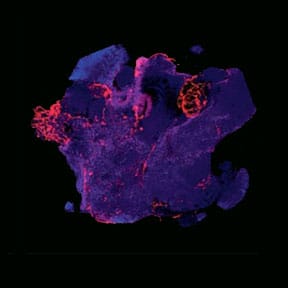
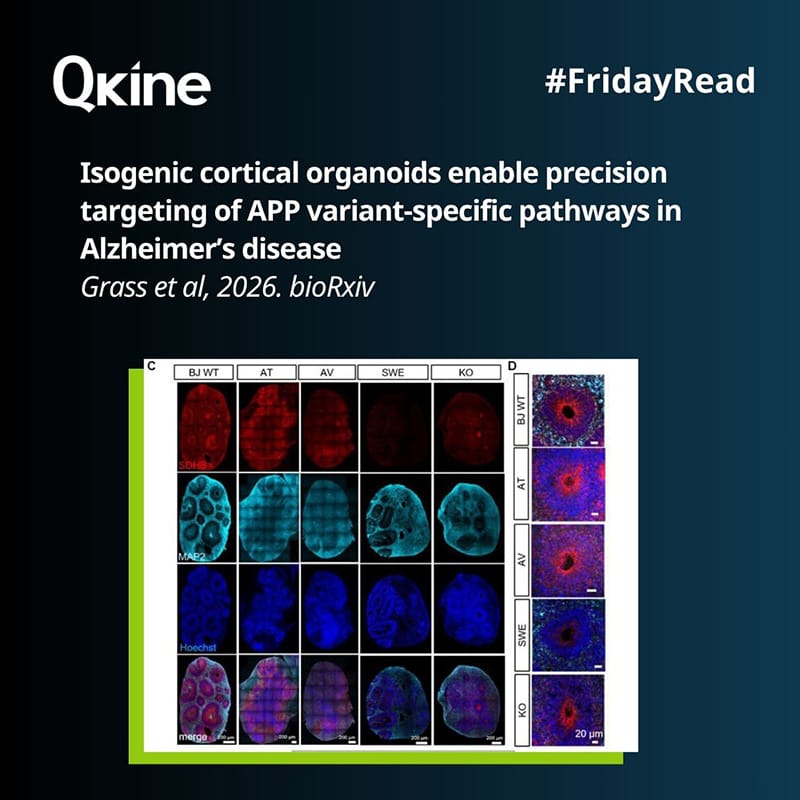
This week’s #Fridayread from the lab of Dr. Natalia Rodriguez-Muela describes the generation of an isogenic panel of hiPSC-derived cortical organoids carrying familial Alzheimer’s disease-associated APP variants or the protective A673T variant. Through the panel of 3D models they identified distinct pathogenic pathways specific to each variant.
#FridayRead 25 April 2025 image
Organoids

#FridayRead 25 April 2025

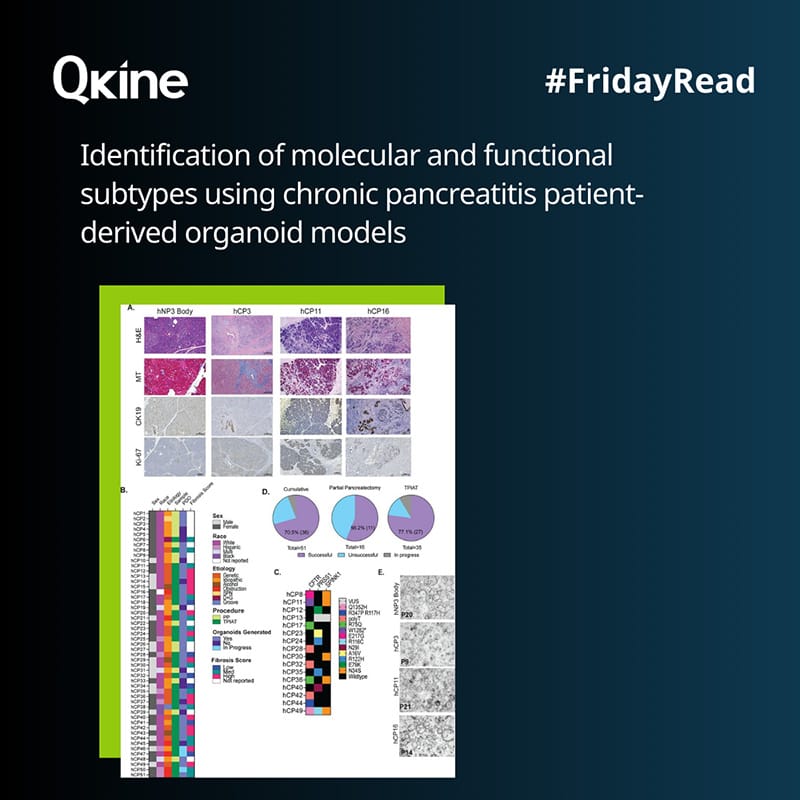
The weeks #Fridayread reports on the development of a patient-derived organoid biobank for the study of chronic pancreatitis and other pancreatic diseases. This will allow the development and testing of targeted therapeutics.
Nurturing Complexity: The role of vascularization in Organoid Advancements image
Blog

Nurturing Complexity: The role of vascularization in Organoid Advancements

Organoids are exciting models that are rapidly becoming a hopeful platform for many medical advances such as drug screening and disease modeling. However, due to a lack of vascularization, they have limitations for future applications. This review blog summarizes several practical methods for successful organoid vascularization to date.
Red Blood Cell Infected with Malaria Parasites
Blog

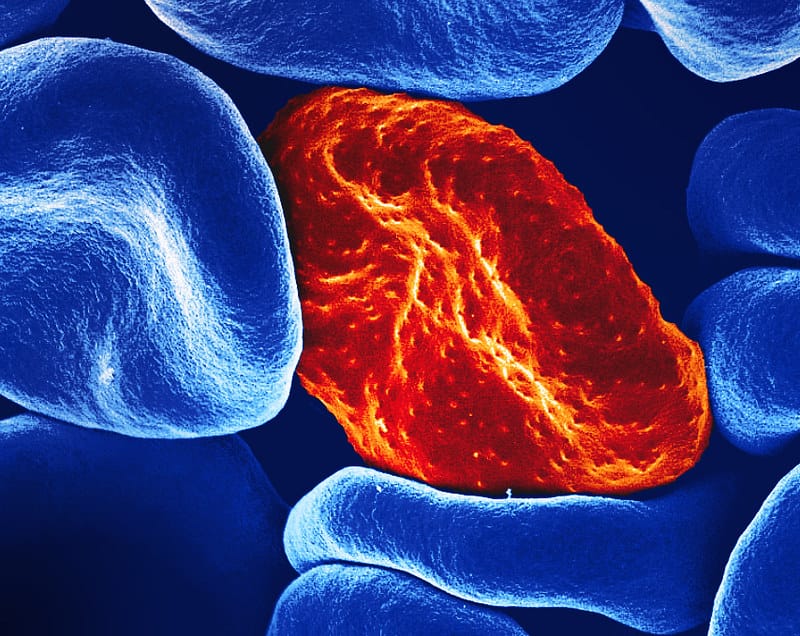
Hepatocyte-derived organoids provide unique insights into liver cell invasion by malaria parasites

Complex 3D liver models that more closely mimic human biology open opportunities for improved drug and vaccine discovery for malaria and related parasitic diseases.
Cardiac organoids – the future of drug discovery? image
Blog

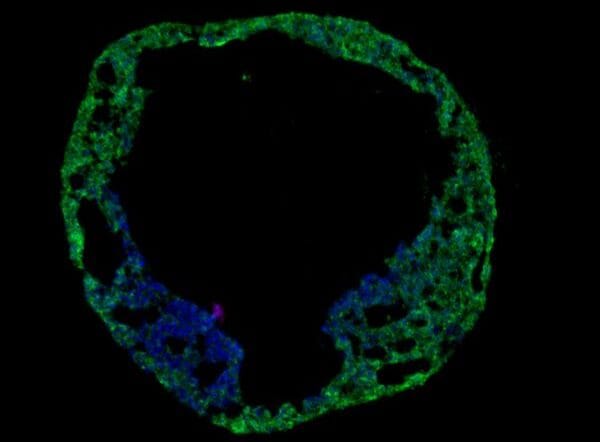
Cardiac organoids – the future of drug discovery?

Despite advances in research, around 90% of drugs fail during phase 1 clinical trials. New drugs for the treatment of cardiovascular disease and oncology have a particularly high failure rate, largely attributed to cardiotoxicity...
Endoderm implants image
Organoids

Endoderm implants

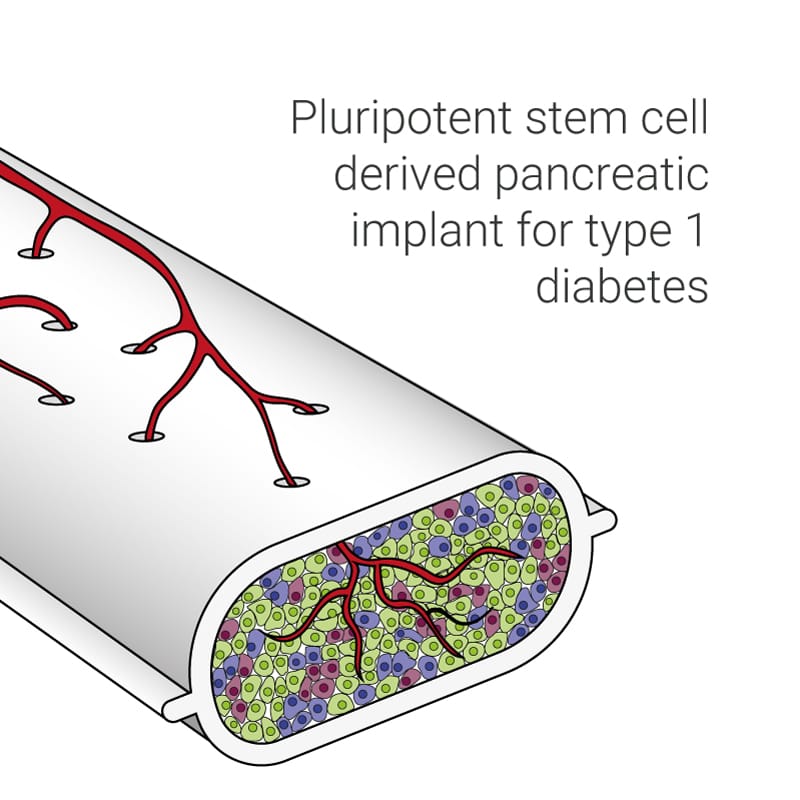
Implantable endoderm organoids combine synthetic support structures and cells to repair or replace the function of endoderm-derived organs like the pancreas, liver, colon, stomach, intestines, lungs, and gall bladder. Adult cells are notoriously difficult to expand in vitro without loss of function, so many implants have harnessed new technologies based on induced pluripotent stem cells (iPSCs) and embryonic stem cells (ESCs). Pioneers in the field are working to optimize cell lines and effectively scale manufacture protocols to transition to the clinic and fulfill the promise of these next generation of stem cell therapies.
organoid reagents available through Japanese distributor MBL
News

Qkine appoints Japanese distribution partner MBL to extend global availability of its innovative stem cell and organoid culture reagents

Qkine has concluded a sales distribution agreement with Japanese company, MBL Medical & Biological Laboratories Co., Ltd. MBL have extensive knowledge and presence within the Japanese regenerative medicine and iPSC sector, an important market for Qkine's high purity, animal-free optimised growth factor and cytokine proteins. The two companies share a focus on product quality and the emerging areas of organoid and organ-on-chip technologies for basic research, personalised medicine and drug discovery. This distributor agreement between Qkine and MBL will facilitate access to Qkine's entire range of premium quality, animal-free and novel optimised growth factor proteins across Japan.
revenge of the organoids comic noggin vs gremlin and engineered growth factors
Organoids

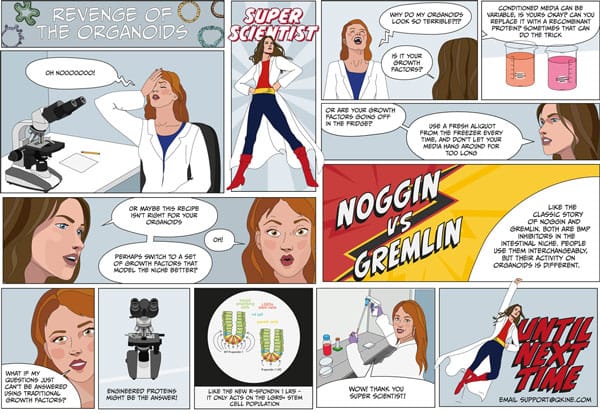
Revenge of the Organoids – Super Scientist saves the day

Can Super Scientist give you your organoid mojo back? Are your growth factors the reason your experiments fail? Can you use engineered or niche-specific growth factors to improve your organoid culture? Super Scientist flies in with easy fixes and questions to ask yourself - do you need to ditch the conditioned media, play around with growth factor combinations, switch noggin and gremlin, or be bold and explore new engineered proteins.
CRC organoid. Images prod National Physical Laboratory
News

Qkine, with UK biotechnology companies Manchester BIOGEL and Cellesce, is developing fully synthetic animal-free scaffolds to overcome barriers in sustainable and scalable organoid culture, in a project funded by Innovate UK

Qkine, Manchester BIOGEL and Cellesce have been awarded Innovate UK Sustainable Innovation Funding to develop fully synthetic, chemically-defined three-dimensional (3D) scaffolds to enable manufacture scale up and improve reproducibility of patient-derived organoids.
Organoid Q&A with industry experts from the HUB, CSHL and Stemnovate image
Organoids

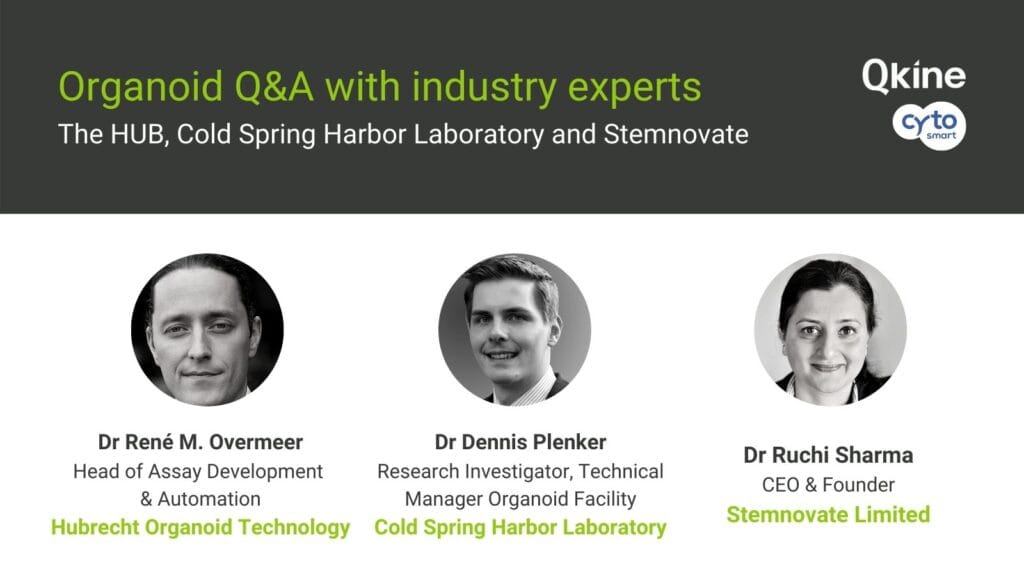
Organoid Q&A with industry experts from the HUB, CSHL and Stemnovate

Organoid Q&A with industry experts from the HUB, CSHL and Stemnovate We recently held a webinar with CytoSMART and organoid pioneers from Cold Spring Harbor…
On-demand webinar: What’s needed to realise the potential of organoids? image
Organoids

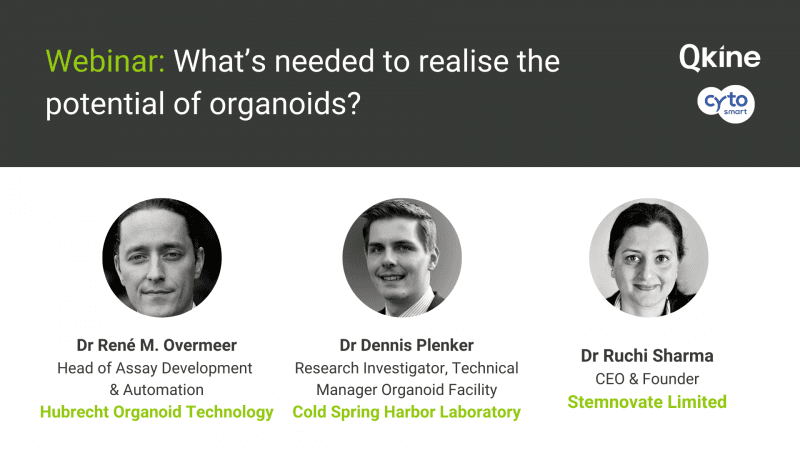
On-demand webinar: What’s needed to realise the potential of organoids?

From standardization of imaging techniques, to more reproducible and cost-effective organoid culture media Organoids have the potential to revolutionize current […]
Building next generation growth factors for organoid-driven precision medicine: a protein engineering project…
News

Building next generation growth factors for organoid-driven precision medicine: a protein engineering project co-funded by Innovate UK

We were delighted to be awarded Innovate UK funding to address issues of quality and availability of growth factors for use in organoid technologies. The Qkine R&D team are applying a combination of protein expression, refolding optimisation and structure-guided protein engineering to improve the biological properties and quality of proteins such as R-spondins, TGFβ1, members of the BMP and FGF family proteins.
Shopping Basket