
StemCultures controlled-release BDNF and GDNF enhance neuronal cell cultures
All data and images were collected by StemCultures in collaboration with the Neural Stem Cell Institute: www.neuralsci.org
Advantages of controlled-release technology
Most growth factors have a short half-life in culture medium. BDNF has a half-life of 2 hours (figure 1A) and GDNF has a half-life of only 45 minutes in culture medium (figure 1B). StemCultures introduces controlled-release growth factor media additives, delivering stable, defined levels for superior neuronal cultures. Experience enhanced cell cultures as we address the challenge of fluctuating growth factor levels, extending the lifespan of critical factors like BDNF and GDNF.
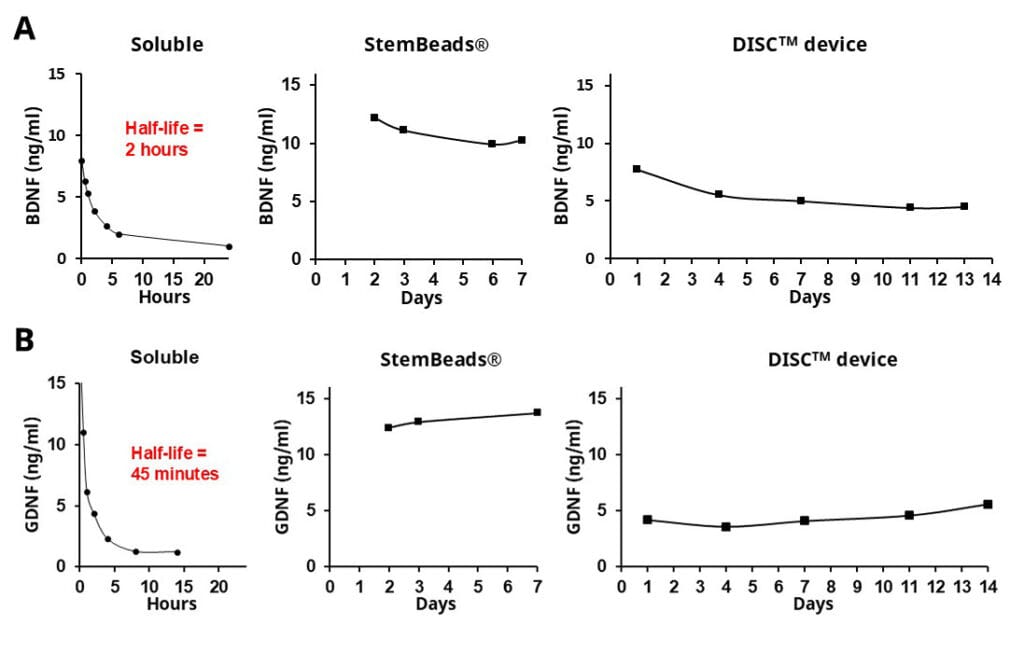
Figure 1. StemCultures controlled release systems stabilise BDNF and GDNF concentrations in cell culture medium. (A) Soluble BDNF has a half-life of 2 hours in culture, StemBeads® and DISCTM devices preserved the levels of BDNF. (B) Soluble GDNF has a half-life of 45 minutes in culture, StemBeads® and DISCTM devices preserved the levels of GDNF.
Benefits of StemCultures controlled release technology
• Stable growth factor levels
• Defined growth factor levels
• Reduced media and labor costs
• Increased MAP2A-positive axonal projections
• Increased number of processes per neuron
• Increased Synapsin1 co-localization with MAP2A positive cortical neurons
In neuronal cultures, replacing soluble BDNF and GDNF with StemBeads® reduced the frequency of feeding required. StemBeads® BDNF and GDNF increased the mean fluorescent intensity of the neuronal marker MAP2A (figure 2A) and the colocalization of pre-synaptic marker synapsin1 with MAP2A (figure 2B). The number of processes per neuron was also increased with StemBeads® BDNF and GDNF (figure 3).
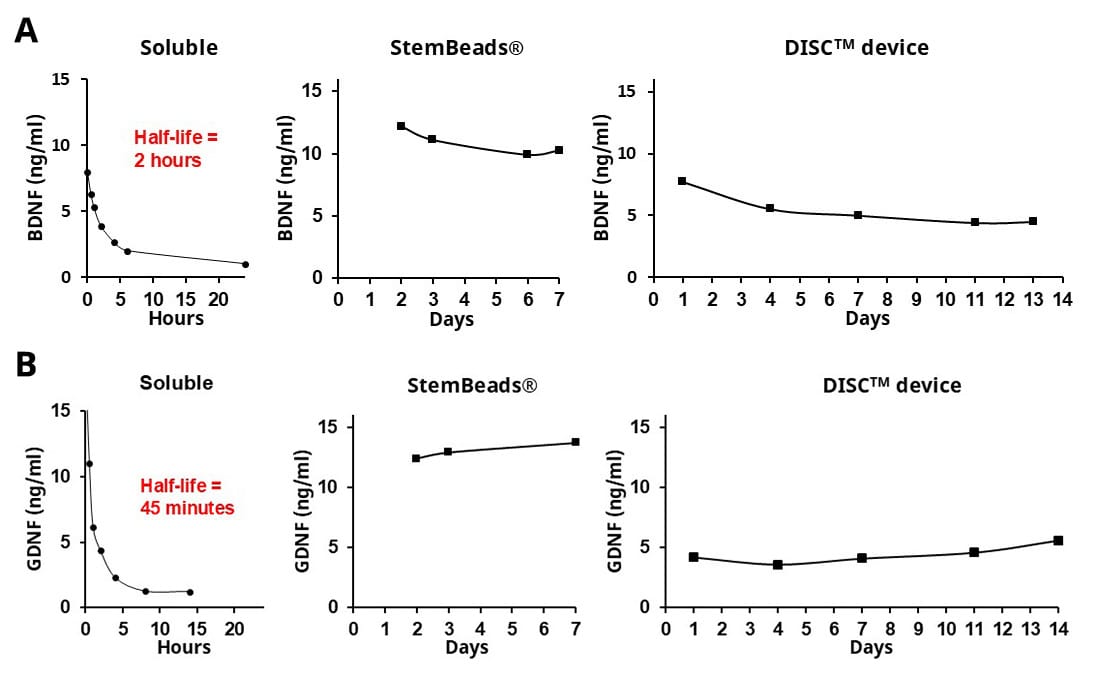
Figure 2. Neurons generated with StemBeads® had increased MAP2A mean fluorescent intensity and colocalization with synapsin1. Immunofluorescent images of human iPSC derived forebrain neurons stained with mature neuron marker MAP2A (red), pre-synaptic marker synapsin1 (green) and nuclear dye DAPI (blue). Neurons were differentiated with 20 ng/ml soluble growth factors fed every other day (top row) compared to 10 ng/ml of controlled-release StemBeads® fed every 4 days (bottom row).
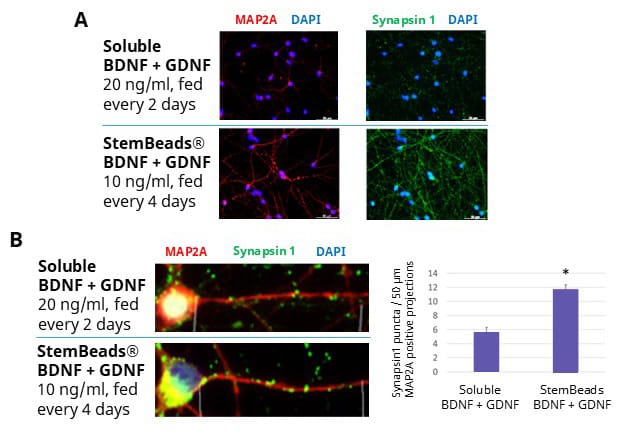
Figure 3. Neurons grown with StemBeads® BDNF or GDNF showed a higher number of processes per neuron. Neurons were grown with either soluble BDNF or GDNF or StemBeads® BDNF or GDNF and the no. of processes per neuron quantified.
How to use controlled release technology
Suggested feeding schedule for using StemBeads® Qkine BDNF or GDNF DISC™ devices.
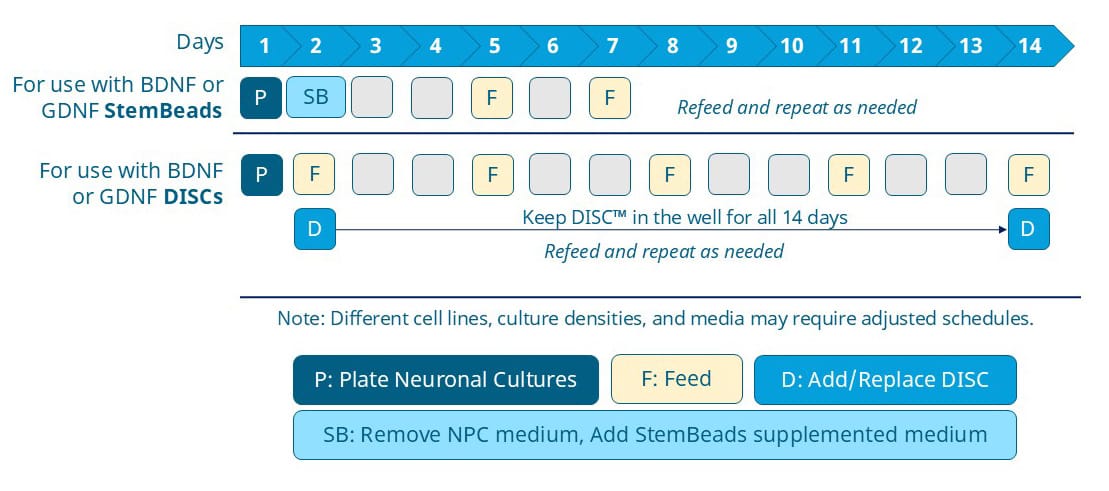
Note: Different cell lines, culture densities, and media may require adjusted schedules, please see product information sheets for more detailed instructions.
Product selection

Further information
StemCultures controlled-release StemBeads® and DISC™ devices contain microencapsulated Qkine growth factors. StemCultures patented technology allows controlled release of Qkine high purity and bioactivity growth factors for the most consistent and reproducible stem cell culture and differentiation.
Qkine growth factors are manufactured to the highest quality standards and are free from animal-derived contaminants, delivering low endotoxicity and high purity. At Qkine, we are committed to raising the standards of growth factors, cytokines and related proteins to better support long-term and complex cell cultures. We are a science-led team, please reach out with any questions or requests to ryan.weber@matriqx.com.
All our recombinant proteins are animal-free and come with Bioactivity. Guaranteed.
Featured resources
StemBeads® Qkine DISC™ device GDNF product information sheet
Contact us
Our science team is here to help, please contact us if you have any questions.
