
Pep talk - September 2025

Qkine partner with the World Organoid and Organ-on-a-chip (WORC) community upcoming events
What is the WORC.Community?
An initiative to bring organoid, organ-on-a-chip and NAM researchers together and a place where researchers can easily connect and share ideas and experiences. Researchers can join as individuals or request a group discussion room for societies to share within the group or with the wider community. Qkine are happy to support the WORC.Community and upcoming events.
Join the WORC.Community for free.
Growth factors and cytokines for organoids and organ-on-a-chip research
As organoids recapitulate tissue-specific features, they are used in the study of tissue development and maintenance, stem cell characteristics, cellular interactions, precision medicine, disease modelling and drug discovery. Due to long periods in culture, it is important that all growth factors for organoid culture give highly consistent biological activity.
Qkine high purity animal origin-free growth factors are particularly suitable for organoid cultures as there is no chance of cross contamination with other growth factors and cytokines. Qkine lot-to-lot consistency in bioactivity also secures a consistent supply of growth factors for particularly long term cultures, where multiple lots may be used across an experiment.
Upcoming WORC events
World cancer research day in 3D - 30th September 2025
Free online event - world leading science and insights! Including presentation by Qkine.
Register through LinkedIn or Zoom
More information about this free event.
WORD+ 2025 Research Celebration + Christmas Social - 4th December 2025
Qkine are pleased to be sponsoring the WORC.Community Christmas event and social at Queen Mary University London.
Extra early bird registration is open now! SAVE 50% until the 30th September 2025.
Register here and also get discounted entry to WORD+2026.
WORD+2026 - 4th February 2026
Save the date and join 400 attendees from academia, pharmaceutical & industry to be inspired by the latest discoveries & advancements.



Our new career blog series
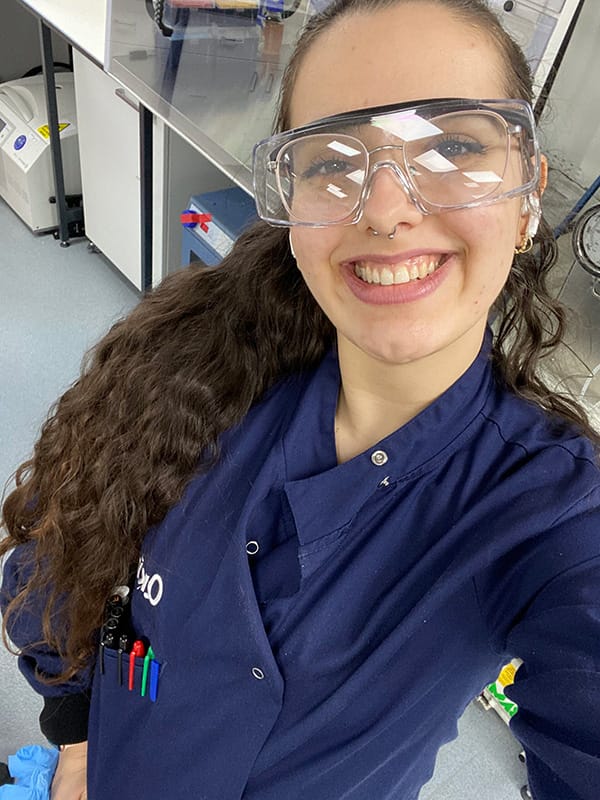
Meet Adriana, Senior Lab Technician at Qkine, where precision meets passion. From protein purification to keeping the lab spotless, Adriana does it all. In this Q&A, she shares what life is really like in biotech, from late-night snack temptations to big career challenges, and leaves us with advice for the next generation of scientists.
Why animal origin-free?
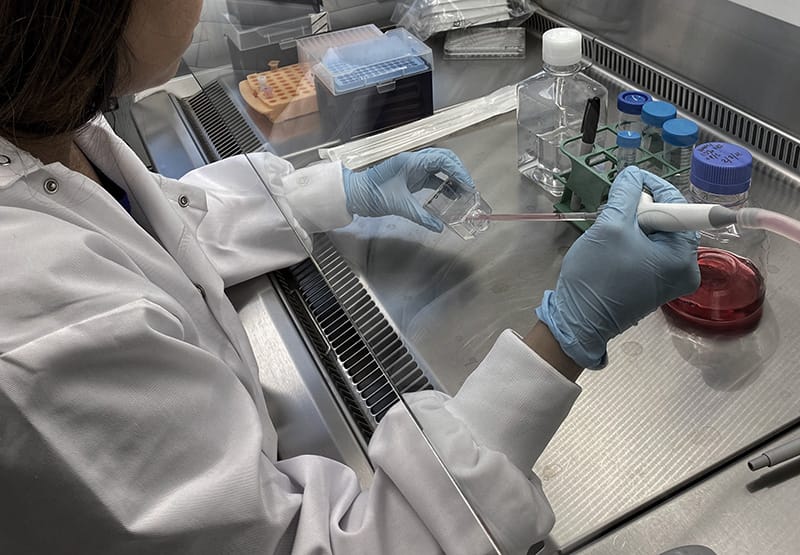
All Qkine proteins are animal origin-free, but why is this so important? And why aren’t all recombinant proteins produced in animal free expression systems?
- Currently some bioactive proteins can only be produced in mammalian cells due to post-translational modifications needed for their function.
- It is always best to use animal origin-free proteins where possible to ensure purity, reproducibility and for translational considerations.
- Qkine's unique protein engineering has created uniquely bioactive animal origin-free proteins such as DKK-1, EPO and TGF-β family proteins.
Learn the whys and why-nots of animal origin-free proteins in our latest blog.
Qkine shipping charge policy – effective 1st September 2025
From 1st September, Qkine will be introducing updated delivery options designed to give you more choice, flexibility and reward ongoing support.
For orders below:
- £1000 – delivery cost £25
- 1200 EUR – delivery cost 50 EUR
- $1500 USA + Rest of World– delivery cost $50
We’re delighted to continue offering free delivery on all orders above the values listed above, as our way of saying thank you for your ongoing support of Qkine.
Did you miss?
Qkine and 3D Bio-Tissues collaborate to improve cell-care for pluripotent stem cell and cellular agriculture applications
Qkine and 3D Bio-Tissues have partnered to complete testing and validation of 3D Bio-Tissues' novel macromolecular crowding technology. CytoBoost™ uses biocompatible macromolecules that reproduce the very crowded conditions within in vivo biosystems, thus creating culture environments more amenable to cells. Read our update and collaborative application notes.
Blog: Unexpected consequences: growth factor cross-contamination in mammalian and E. coli expressed growth factors
At Qkine, we have repeatedly highlighted the need for stricter process and quality control in the manufacture of recombinant growth factors to prevent cross-contamination with related growth factors. Contamination with other bioactive proteins leads to a lack of inter- and intra-lab reproducibility or, perhaps most concerningly, incorrect scientific conclusions. Read our blog to learn more.
What's new?
Recombinant human IL-34 PLUS™ protein (Qk091)
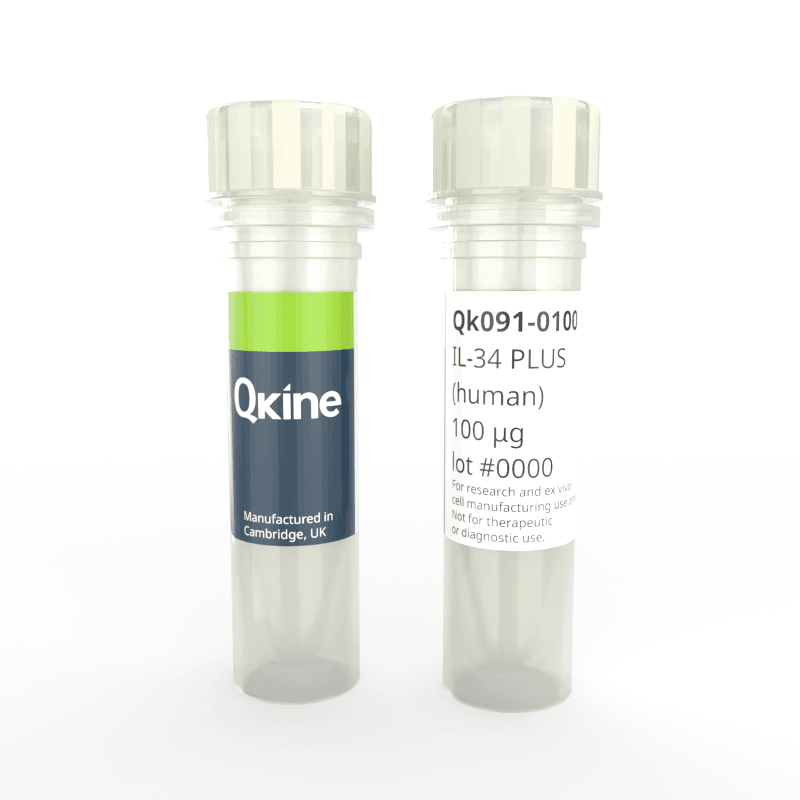
Qkine have developed the only commercially available bioactive animal origin-free IL-34!
Qkine have optimized the sequence and manufacture of IL-34 PLUS™ to produce a highly and consistently bioactive protein (patent pending GB 2514413.0). Qk091 has a molecular weight of 25 kDa as a monomer and is supplied as a non-covalent dimer, highly pure, animal origin-free, tag free and carrier free for reproducible microglial differentiation and immune cell culture.
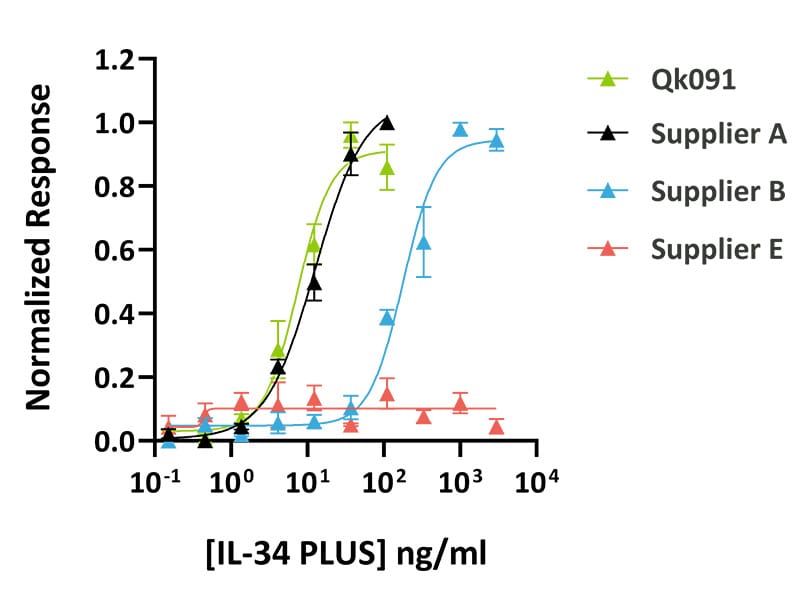
Qkine animal origin-free IL-34 PLUS™ was as bioactive as a mammalian cell-expressed IL-34 from an alternative supplier. IL-34 activity was determined using an SRE reporter assay in HEK293 cells co-transfected with the CSF1R receptor. Transfected HEK293 cells were treated in triplicate with a serial dilution of Qkine IL-34 PLUS™ (Qk091, green), mammalian cell-expressed IL-34 (Supplier A, black) and (Supplier B, blue) or bacterially-expressed IL-34 (Supplier E, pink) for 3 hours. Firefly activity was measured and normalized to the control Renilla luciferase activity.
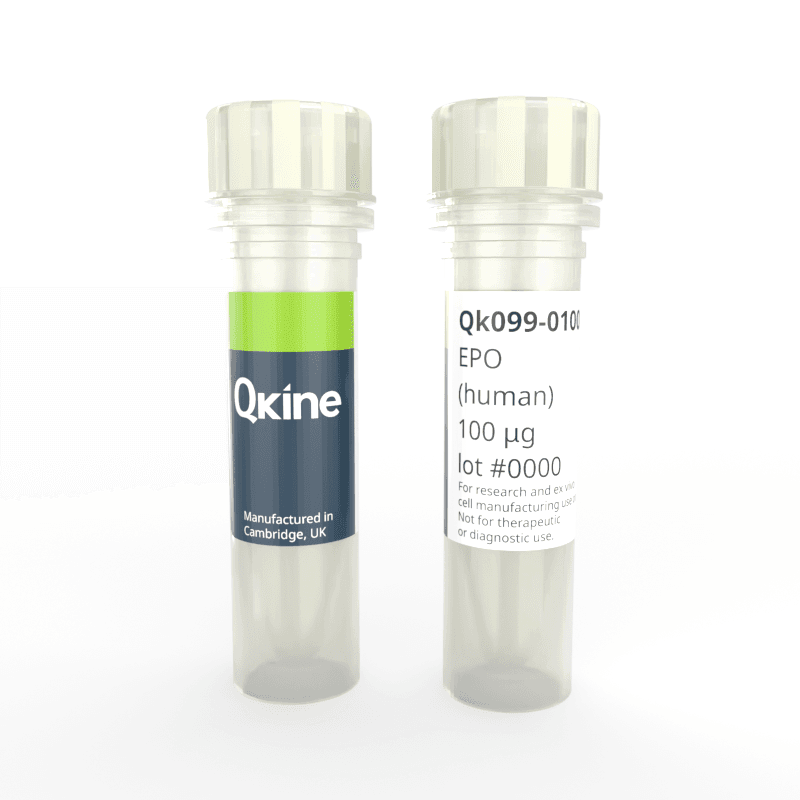
Recombinant human EPO protein (Qk099)
Qkine have developed the only commercially available bioactive animal origin-free EPO!
Erythropoietin (EPO) is an essential cytokine hormone which controls the production of erythrocytes (red blood cells). Recombinant EPO can be used in the differentiation of hematopoietic projector cells into erythrocytes and other major hematopoietic lineages.
Bioactive and animal origin-free EPO for reproducible hematopoietic stem cell culture. Qkine EPO is a 18.4 kDa protein, tag-free and carrier-free.
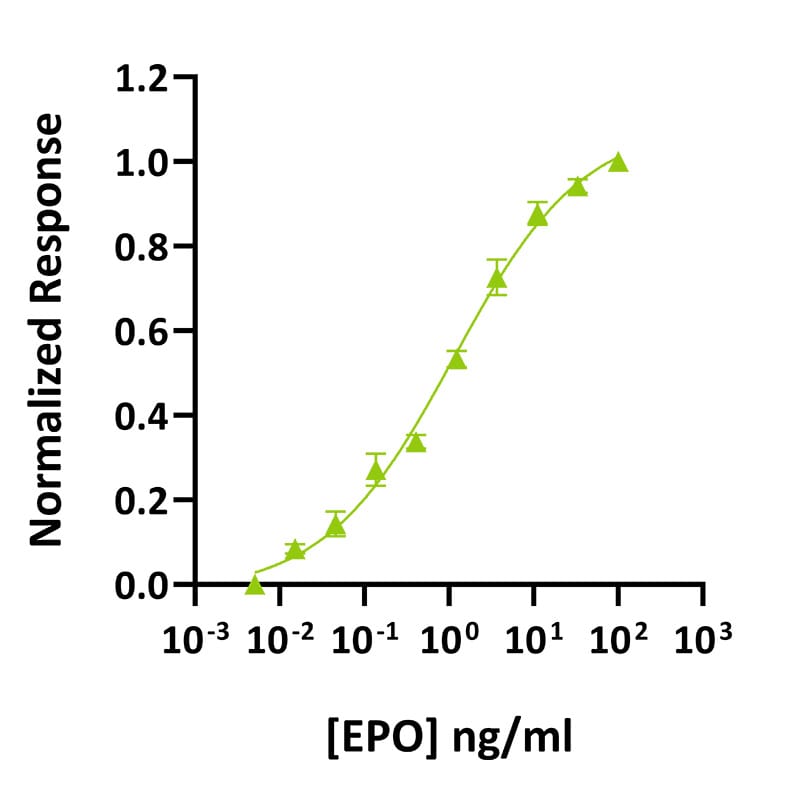
Recombinant EPO activity was determined using proliferation of TF-1 human myeloid leukemia cells. Cells were treated in triplicate with a serial dilution of EPO for 72 hours. Cell viability was measured using the CellTiter-Glo (Promega) luminescence assay. Data from Qk099 lot #204757. EC50 = 1.14 ng/ml (62 pM).
New technotes
At Qkine data transparency is our promise. We test all new products against others on the market to ensure each is as bioactive or more, only then will they be approved for sale.
Each new lot is tested to ensure the bioactivity is consistent lot-to-lot, to ensure the most consistent cell cultures and assays. All data is available for all lots, and many are available as technotes.
Why not see if data on your protein of interest is available (if not ask!)
Technote | IL-18 (Qk100) bioactivity
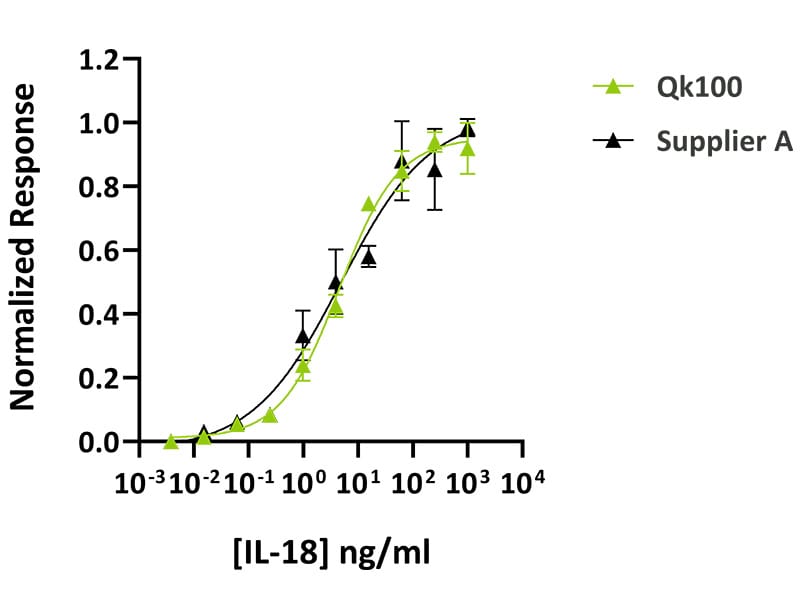
Qkine IL-18 was as bioactive as IL-18 from an alternative supplier. Recombinant IL-18 activity was determined using the Promega serum response element luciferase reporter assay in transfected HEK293T cells, co-transfected with IL-18R alpha. Cells were treated in triplicate with a serial dilution of Qkine IL-18 (Qk100, green) or alternative supplier IL-18 (R&D Systems, 9124-IL-010/CF, Supplier A, black) for 6 hours. Firefly activity was measured and normalized to the control Renilla luciferase activity. Data from Qk100 lot #204753.
Technote | TNF-alpha (Qk083)

Qkine TNF-α had comparable bioactivity to a alternative supplier protein. Bioactivity was determined using a NF-κB firefly luciferase reporter assay. Transfected HEK293T cells were treated in triplicate with a serial dilution of Qkine TNF-α (Qk083, green) or Peprotech TNF-α (300-01A, Supplier B, black) for 3 hours. Firefly luciferase activity was measured and normalized to the control Renilla luciferase activity. Data from Qk083 #204609.
New Publications
A complete model of mouse embryogenesis through organogenesis enabled by chemically induced embryo founder cells
Li, H et al. Cell, August 2025
Researchers employ a small-molecule-only approach to induce mouse embryonic stem cells into 8- to 16-cell-like embryo founder cells, enabling the generation of a complete embryo model. These founder cells specify all blastocyst lineages, both embryonic and extraembryonic, in vivo and in vitro enabling a direct, rapid, efficient, and accurate in vitro model of embryogenesis.
Used Qkine mouse LIF (Qk018)
HNF1A and A1CF coordinate a beta cell transcription-splicing axis that is disrupted in type 2 diabetes
Researchers demonstrate that diabetes arises from β cell-autonomous defects and identify direct β cell genomic targets of HNF1A. This uncovered a regulatory axis where HNF1A controls transcription of A1CF, which orchestrates an RNA splicing program encompassing genes that regulate β cell function.
Used Qkine activin A (Qk001)
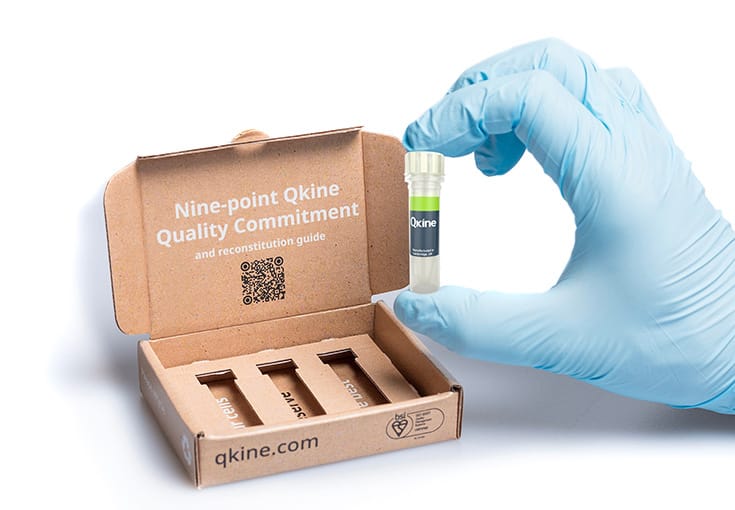
All our growth factors are manufactured within a stringent quality framework, ensuring high-quality proteins that maintain robust, reproducible, and physiologically relevant stem cell and organoid cultures that adhere to our Nine-point Quality Commitment.
Upcoming Events
- Berlin Organoid Symposium | 24 September 2025 | Berlin, Germany
- Roger Williams Centre Institute for Liver Studies, King's College London - Lunch & Learn Seminar | 1 October 2025 | London, UK
- Innovative Therapies Days 2025 | 9-10 October 2025 | Kursaal - Besançon, France
- Cambridge Stem Cell Institute Symposium | 13-14 October 2025 | Cambridge, UK
- German Stem Cell Network Conference 2025 | 15-17 October 2025 | Munich, Germany
- EMBL Organoids: Modelling organ development and disease in 3D culture | 22-25 October 2025 | Heidelberg, Germany
- Annual Oxford Stem Cell Institute Symposium | 3-4 November 2025 | Oxford, UK
We'd always love to meet you at any of events, contact ryan.weber@matriqx.com to make an appointment.
What’s next?
Qkine are committed to producing the most high quality and bioactive growth factors and cytokines, coming soon to our extensive portfolio:
- Recombinant human activin B protein (Qk024) - Expected October 2025
- Recombinant human activin C protein (Qk026) - Expected October 2025
If you wish to be notified when proteins are released, contact us ryan.weber@matriqx.com
